Sho-Bans in the Spotlight: Lorraine Edmo, first Sho-Ban News editor
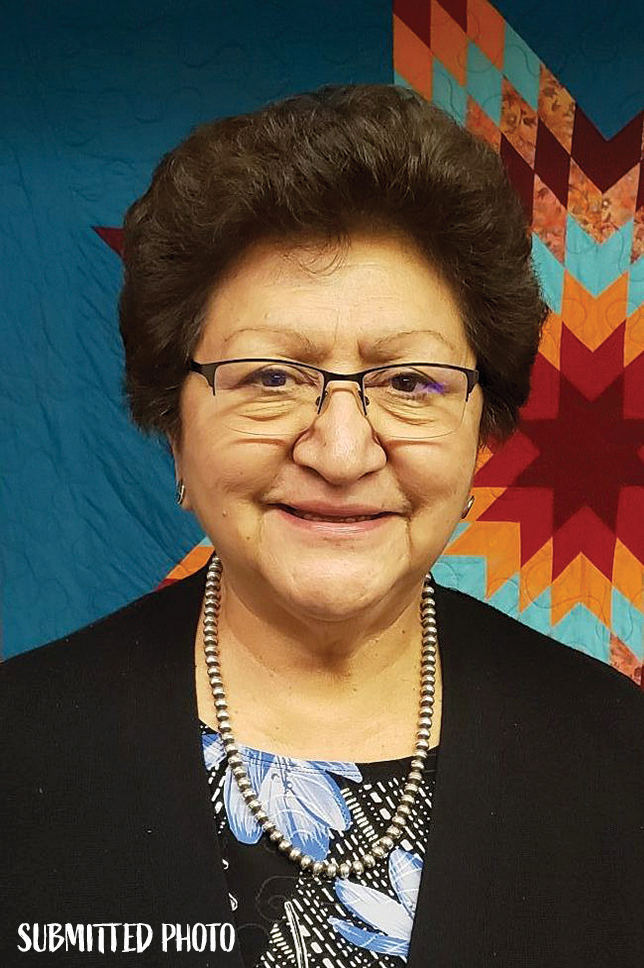
Lorraine Edmo.
By LORI ANN EDMO
Sho-Ban News
FORT HALL — The Sho-Ban News evolved back in 1970 as a monthly newspaper after Lorraine P. Edmo graduated with a degree in journalism from the University of Montana, Missoula.
She wanted to do something on the reservation after graduation, so she talked to the tribal council and asked them to support a tribal newspaper, she started pulling things together and was hired as editor.
She requested them to pay for printing and producing the newspaper once a month. Lorraine did the reporting and the photos — it was printed at the Blackfoot News. All her writing was done on an electric typewriter and she had a little office at the 1896 building.
Lorraine did 11 or 12 issues and she still has copies of them. Approximately 500 copies were printed and tribal custodian, the late Jesse Pabawena helped her mail them. Then tribal secretary Monte Faulkner helped her print the labels.
The name for the newspaper Sho-Ban News came after she ran a contest in the first issue that the late Tom Eschief Sr. won.
When asked about stories she covered, she replied, “Everything. I covered national news somewhat and water rights issues. I covered thing happening on the reservation, like the council elections. I covered projects — there was an archaeological project going on that employed young people,” she said. “I did a story about building the rodeo grounds because that year in 1970 was the year that my brother Kesley Jr. was directing the project, it was some sort of an economic development project where the guys helped build the rodeo grounds,” in the current location.
Lorraine said she wrote an editorial every week and one that got her in trouble was when the old jail flooded with sewage. She interviewed then Bureau of Indian Affairs superintendent Hirum Olney on why it happened because the BIA was responsible and all he said was, “I don’t know 16 times.” So she wrote 16 I don’t knows in her editorial and some people didn’t like that – thought she was raising heck with him. The newspaper was sent to local jails and the prisoners got a kick out of it because on the door of the jail, it said it’s closed and full of expletive (queedup) too. “That was one of the crazier stories I did.”
She did a long section on the 17 council candidates in the May 1971 issue. That was the last monthly Sho-Ban News printed. After that, she was accepted into a summer internship journalism program at Columbia University in New York City. Local CBS broadcast affiliate then known as KID paid for her expenses thanks to then tribal attorneys Reed and Dwight Bowen.
She worked for KID for at least a year doing daily stories and she wrote the 5:30 p.m. newscast. A couple of months after she was hired, a non-Indian reporter was hired who was paid more than her. There were a lot of non-Indian women at the station who wouldn’t even communicate with her, “So I just had to hang in there, do my own thing with the newscast.”
She noted the newspaper has changed drastically over the years because “now you have staff, and continually publish it every week. And it’s a good layout, really good writers and stories and presentation — it’s really good to always be able to get the Sho-Ban News every week.”
She would like to see more coverage on tribal issues the tribal council is addressing what they consider important to the tribal people such as what their priorities and why certain issues aren’t being addressed such as drugs and alcohol. “I know drugs are a huge problem. I think the council needs to really pay more attention to that.”
She said her work at the Sho-Ban News was a real good experience because she got the chance to use her skills that she learned in college. “It gave me a lot of knowledge working with the people both here and nationally because I also went to a couple of national, I think back then the American Indian Press Association was still going.” So I got to go to that and interact with people from all around the country that were editing newspaper, tribal newspapers, she explained.
After KID she has a long history of working with different organizations including the Idaho Inter-tribal Policy Board in Boise involving the five Idaho tribes where they also published a newspaper called the Native Gem for five issues. She went to a summer law program in Albuquerque when she thought about attending law school.
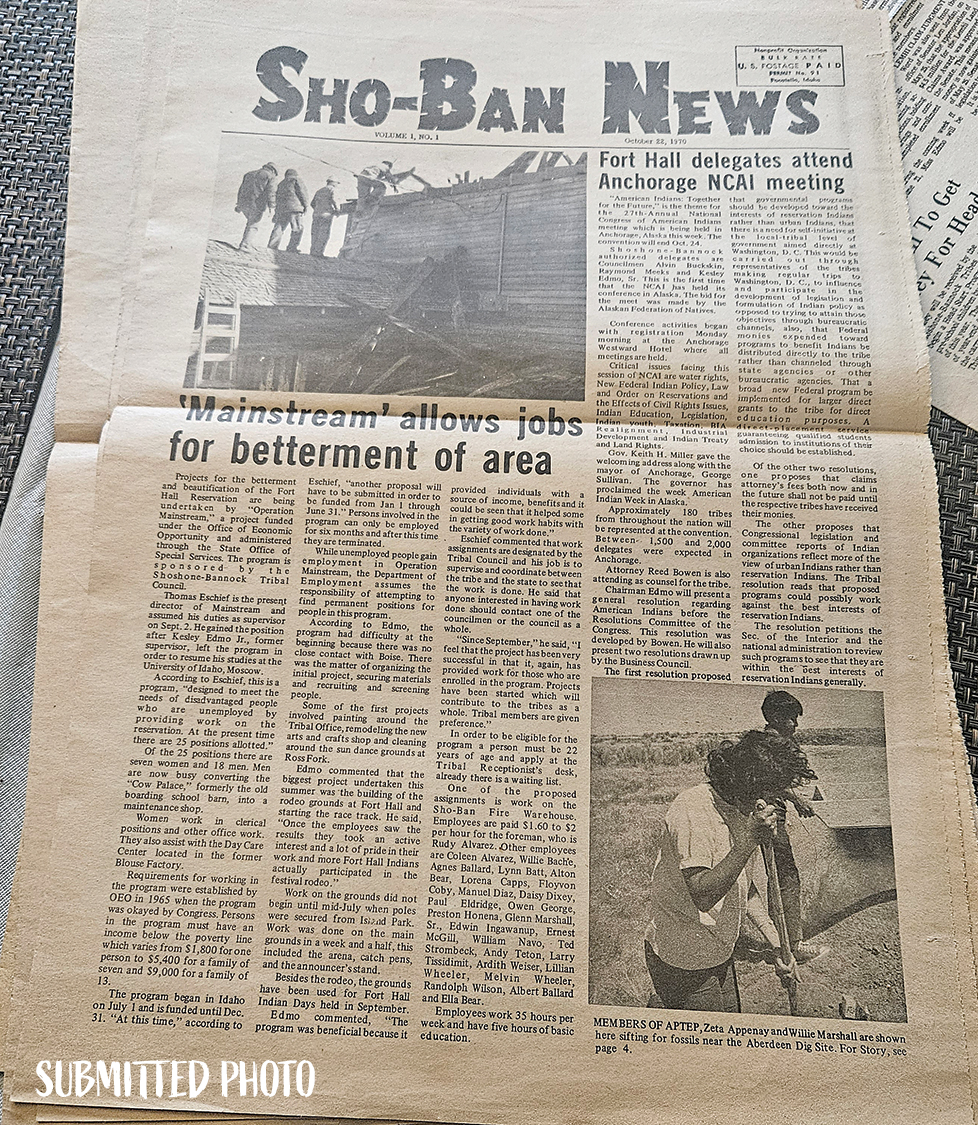
The first Sho-Ban News issue printed in 1970, with Lorraine Edmo serving as editor.
Lorraine worked as a technical writer, development officer for the Native American Rights Fund in Colorado for five years. From there she applied for a fellowship with the Department of Education and earned a Masters in Public Administration from the University of New Mexico. She worked at the National Indian Youth Council for a short time then was hired as executive director of the American Indian Graduate Center for nine years funding about 3,000 students.
From there she and her husband Jerry Cordova moved to Washington D.C. where she worked for the Administration for Native Americans. She saw where the National Indian Education Association was seeking an executive director so she applied and was hired for about five years. There she advocated for Indian education nationwide, did a lot of testimony in Congress advocating for the preservation of Indian education.
While at NIEA, she worked closely with David Bolieau who was director at Office of Indian Education at Department of Education. He hired her to work and they were able to get an executive order signed by President Bill Clinton for k-12 American Indian Alaska Native education. “It was a major accomplishment and there was a signing ceremony in Washington D.C. A new Republican administration came into town so she left to work for the BIA American Indian Education Foundation to raise money for BIA schools – funds for needs not met by the government. However, they found out the name had to be changed so it took a year to change it to the National Fund for Excellence in American Indian Education. She was laid off in 2006 unemployed for six months.
Lorraine said she discovered the Department of Justice was advertising for a position with the Office on Violence Against Women. She was hired as Deputy Director for Tribal Affairs at OVW. “So that was a great opportunity because I got to supervise the awarding discretionary grants throughout the United States to tribes. and tribal coalitions and nonprofits. So, I worked at the Department of Justice for 10 years and had a small staff of about five program specialists,” she continued. They created five or six grant programs addressing sexual assault of Native women. They had tribal coalitions funding 22 of those around the country. In 2013, they developed the special domestic violence criminal jurisdiction program as Congress passed the provision saying that tribes could prosecute non-Indians who abuse Native women.
She conducted the annual tribal consultation with tribes, government to government consultation, “I had to organize it with the contractor, I had to moderate it, and I had to bring in all of these other agencies that had a hand in violence against women issues. and that included BIA, Indian Health Service, SAMHSA, the COPS program — any program that managed grants aimed at combating violence against Indian women.” She did the annual consultation for 10 years — a summary of all of those proceedings, it should be on the DOJ website. In 2016, they did the first ever consultation on Alaska Native issues — a listening session on Alaska Native women’s issues, conducted it in Fairbanks, Alaska, before she left. And they haven’t had one since then. But that publication is still on the DOJ website. But it was really good, she said.
She left DOJ in 2017 when the Trump Administration came in then moved to Albuquerque. She served as acting director of the National Indian Youth Council for a year then retired. However she is still on the board as chairperson now known as Native Professional Advancement Center and they meet quarterly.
She’s done many things since leaving Fort Hall — her whole purpose was to work for Native people and to advance the interests of Native people. “And I truly believe in Indian self-determination and hiring of tribal members, Indian preference in hiring. So I always tried to do that in all my positions.”
Her advice to young people is they need to really have a broad mind. “They need to learn all they possibly can while they’re going to school. And if they have an opportunity to go achieve higher education, even if it’s not a bachelor’s degree and a master’s degree, then also just go for Vo-Tech training, something that can really benefit them and also be of use to their family and to the tribe. And that they should really take an opportunity to read the newspaper, the tribal newspaper every week, and even try to become a reporter if something becomes available. They could take journalism classes down at Idaho State. They don’t necessarily have to have a BA degree, but even some courses in writing and English and journalism would be great.”